
“This is the first data conflict in history” says Bram Couwberghs, a Belgian Microsoft leader. Of course he is talking about the Russia-Ukraine war. Couwberghs is keeping tabs on the digital international battlefield for the authorities in western Europe. “Russia sees this as a conflict not only fought in the field, but also online, with espionage, fake news and cyber-attacks” he explains his work at the American software giant.
Microsoft Belgian scrutinises international digital battlefield for western governments
Colin Clapson
Published:
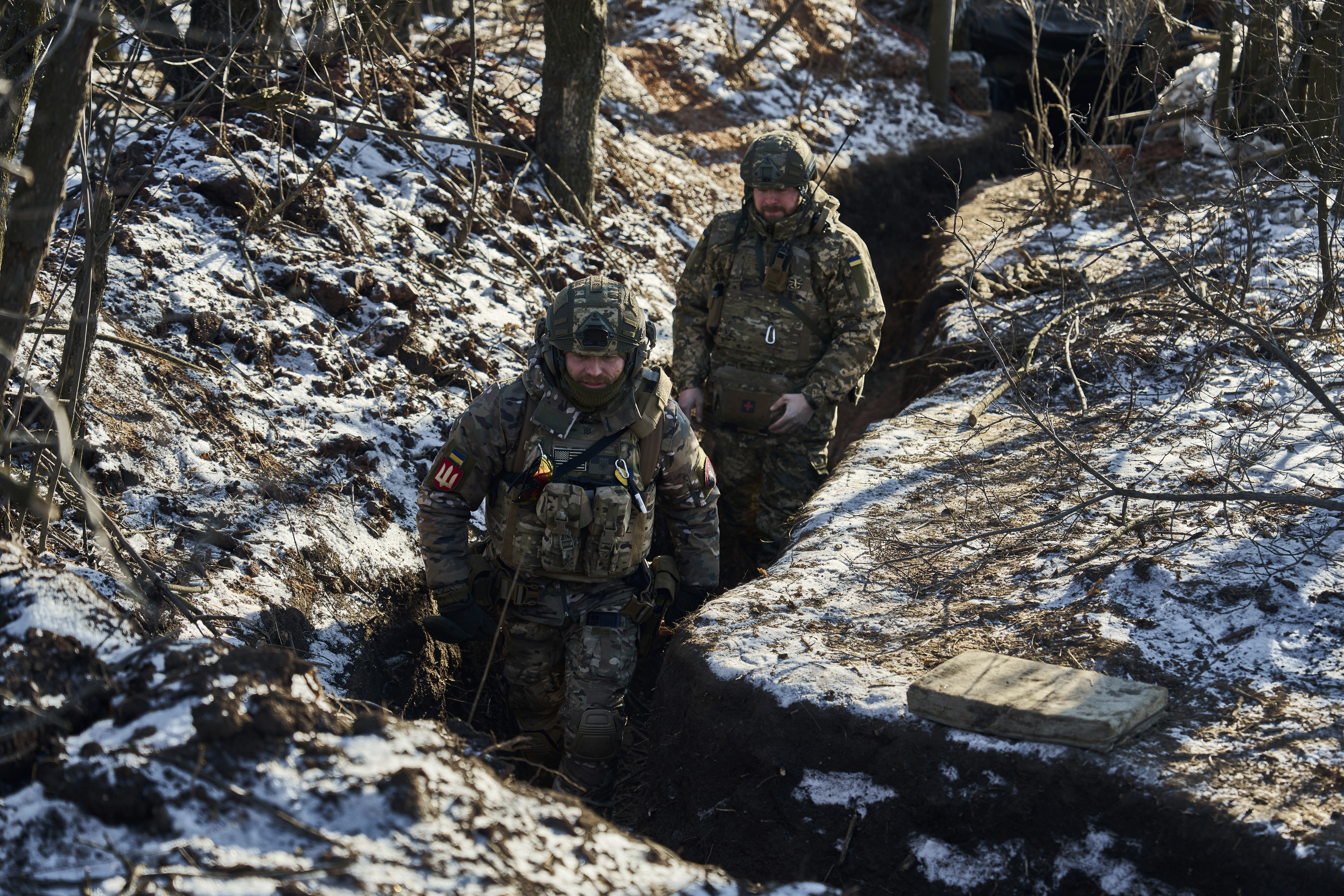
Russia’s further invasion of Ukraine started nearly a year ago. Pictures from the country usually show military activity: tanks stuck in the mud, rockets and the damage they cause to blocks of flats and soldiers gunned down in cold blood. This sets the tone of the conflict.
Behind the scenes an invisible war is being fought out. Couwberghs used to work for the Belgian army where he made mines safe. Today he is Microsoft’s Defense Intelligence Leader for West-Europe: “I establish contacts with European governments and defence departments and lead the contacts” says Couwberghs.
“Technologically everything has evolved so quickly and data has become more important. The volume of data but also the impact via social media, mobiles and satellites has become so much greater”.
“Russia was aware of this from the start. The first targets were data centres, communication towers and media outlets that ran contacts between citizens and the authorities. Russia not only sees this as a conflict that needs to be fought in the field. It wants to use data to influence the way people think about them and their opponent.”
Data is also important for the military: “Pictures of tanks shared on social media can give the Ukrainian army an advantage and allow them to take them out”.
“The best defence is to ensure tanks never make it to their destination on the battlefield. Ukraine employs all the information it can get its hands on. In this way a small amount of data can provide a tactical advantage. In this war data is like oil. It’s a raw material of strategic importance.”
Ukraine quickly learned to protect its own data. Microsoft helped the country to safeguard crucial data. Just after the further invasion a massive transfer of data took place from physical data centres in Ukraine to cloud storage. It’s quite an undertaking and one that doesn’t offer all solutions. “In this way data can be attacked less easily” explains the Belgian.
“The constant cyberattacks mean we are always on the look out for new forms of defence. Every vulnerability that is identified is immediately tackled”.
Ukraine is no defenceless victim of cyber assaults. “In digital matters Ukraine is a highly developed country. It has developed certain applications to collect information from citizens’ mobile phones. In reality the country had and has a head start on Russia. The Russians attacked, but Ukraine was easily able to neutralise the attacks”.
Microsoft is a commercial enterprise and says a safe environment, free speech and democracy are beneficial for its products. “Our interests partly resemble those of Ukraine” notes Couwberghs. Transferring data is also part of the business model. “Data centres cost money but are also an investment”. The Belgian denies that Microsoft now forms part of the war economy: “Worldwide there are some 200 countries optimising their data storage” he says.
Is there also a threat to Belgium?
“Of course, Belgium is a target” says Couwberghs. “Both for cyber-attacks as well as for fake news campaigns. Shortly after the February invasion the Baltic states received a lot of Russian online attention. Probably the country hadn’t expected the West to remain so unified. As the war progressed, we saw that NATO became a more important target for espionage, influence campaigns and cyberactivity. We work closely with the governments. We try to share information as openly and honestly as we can with our partners, who we think need this information”.
The situation shows how powerful tech companies are: not only Microsoft, but also Elon Musk’s Starlink and Mark Zuckerberg’s Meta. Couwberghs believes Microsoft has influence not power: “The decisions on which actions to implement are taken at the political level. Business responds to that”.
“But I believe that as a company we cannot reconcile ourselves with regimes like Russia, Iran or North Korea. We posses a charter, a mission. Industries have always shown support in conflicts. Consider the Second World War or the Gulf War. We are a western company that stands for democracy”.